

Historical scan
Palace of Gnat Khotkevych
We have been creating culture since 1934
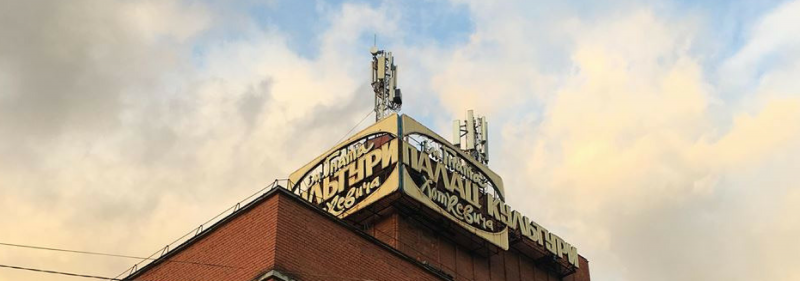
1924 Employees club for employees
The idea to create the Palace arose after a workers' protest in 1924. They had no place for their gatherings and leisure. The local budget did not allocate funds for the project, so the enthusiasts raised the money themselves. For 10 years, they allocated allowances from their salaries for construction. Since 1927, each worker has deposited 1% of the monthly salary for the Palace. So they collected 50 thousand zlotys for the realization of their dream and announced a competition for building projects. The winners were the famous architects Tadeusz Vrubel and Leopold Karasinski.
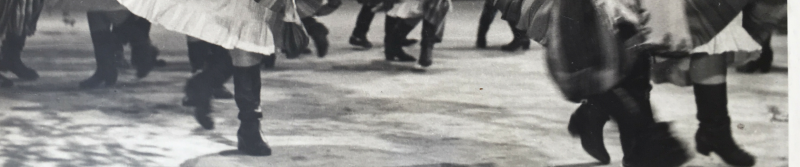
1934 begins the history of the Palace, then the Club of Municipal Employees of Lviv, a place for cultural leisure of residents and guests of the city. A large concert hall, a room with board games, a reading room and a library, a burning stove, a buffet, a bowling alley in the basement and a spacious terrace for orchestra on the roof — this was the Palace according to the architects' drawings. But the original appearance of the institution is different from the present one, according to the surviving sketches, the building was half smaller.
Culture as a key reference point of the institution was formed precisely during the period of “Black and White Cinema”. In 1936, the institution hosted the Anti-Fascist Congress of Cultural Workers. Two years later, the administration of the Club appealed to the city government with a request for permission to equip the cinema. This is how the “Light View” appeared, which functioned for a year. From December 1939, the cinema was renamed “Cinema named after Valery Chkalov”, later in 1941-1944 — “Ton”. After the war, cultural development revived, and in 1947 the dance ensemble “Dream” appeared in the institution, which exists to this day. In 1956, the ensemble took part in the filming of the film.
From the 1970s, the Workers Club was transformed into the Tramways Club. Here, employees of Tram depots and other residents of Lviv organized their dibanks.

Significant demand among the population and active interest in the activities of the Club contributed to the development of the institution. In the 1980s, during the Soviet occupation, the Club was reconstructed and the end part was completed. In addition, the institution was renamed again. Since then, it has become the Palace named after Nikolai Kuznetsov.
Mykola Kuznetsov
Soviet intelligence saboteur. During World War II, he carried out terrorist and provocative tasks of the Soviet command, which were aimed at provoking terror in response from the German occupation authorities against the Ukrainian population — assassinated the heads of the German administration in Rivne — the capital of the Reichskommissariat Ukraine, and Lviv — the administrative center of Diy Street “Galicia”.
“Unconscious Possibilities” — a period when life was raging in the Palace: dance ensembles “Mriya”, “Flowers of Ukraine”, vocal ensemble “Necklace” and theater “Under the Bridge” were formed, a circle of fine arts that still function, the large stage of the institution was a playground for rehearsals of the Opera House, etc. There were a lot of opportunities. But some are still in the bud due to the lack of a favorable environment and initiative of the administrative authorities.
The declaration of independence shook the whole of Ukraine, changes also affected the Palace. In the 1990s, multidisciplinary cultural figure and innovator Gnat Hotkevich became the patron of the institution. A man who worked in different realms and in each was a master. His subjects were literature, theatrical skills, musical art, journalism, cinema, engineering. Its versatility is harmoniously combined with the diverse activities of the Palace: dance, vocal ensembles, studios of fine arts, musical literacy, theater and acting skills. That is why the name of the Palace in honor of Gnat Hotkevich is appropriate and justified.
Hotkevich Palace is an environment where talents are born and hardened. On the big stage in different periods the bands “Ocean Elzy”, “Brothers Gadyukina”, “Pickardian Tertia”, “Wszystko”, “Niagara”, Ukrainian singer Ruslana Lyzhichko, American virtuoso guitarist El Di Meola, academic symbol Inso-Lviv Symphony Orchestra, writers Yuriy Vynnychuk, Yuriy Andrukhovych, Viktor Neborak, Bohdan Stupka. On the stage of the Palace, the first performances of the theater “Do not regret” took place, here was born the Galician association KVN Galicia, which founded the Galician League, the Students' League, the School League, whose competitions are still held in the Palace.
In 1996, the Palace was subordinated to the Lviv City Council, and the following year it began to work under the Charter.
“Period of stability” is a time lapse in the history of the Palace, which is certainly filled with cultural life. Events of various scales took place in the institution, new groups and circles were created. But in the market among cultural institutions, he is a laggard. The people of Lviv knew that children were dancing or singing. However, few have heard of the School of English, which has been operating since 1996. Nevertheless, it was then that they held the Galician League of KVK (2000), launched the annual festival “Ark” (2006), joined the organization of the music festival “Lviv Acoustic Festival” (2013), etc.
The period of stability is a kind of calm before colossal changes, where the Palace is a massive and high glacier waiting for spring and warmth.

“Hope is our compass” is a period of challenge, a sure leap to innovation and progress, which is now being created and filled with meaning. In 2015, after Lviv won the title of “UNESCO City of Literature”, an office of the same name was created in the Palace. Among the areas of work of the department is the organization of urban projects for the popularization of reading, the development of literary creativity and publishing. In 2016, the department organized the festival “City of Inspiration”.
2018 is the year of exploration of the Palace: from history and content to architectural elements and the stone from which the building was built. This year they developed a new corporate style, logo and slogan of the Palace — “To see the new, to go beyond the horizon”. With the participation of all the employees of the institution, they formed the Strategy for the Development of the Palace of Gnat Hotkevych until 2025, together with fifty cultural managers of Lviv region analyzed the environment of the institution inside and outside and identified its strengths, weaknesses, opportunities and barriers.
Hope is our compass as a new era, the goal of which is to turn the Palace into a competitive cultural center, a trendsetter. We write a new story.